
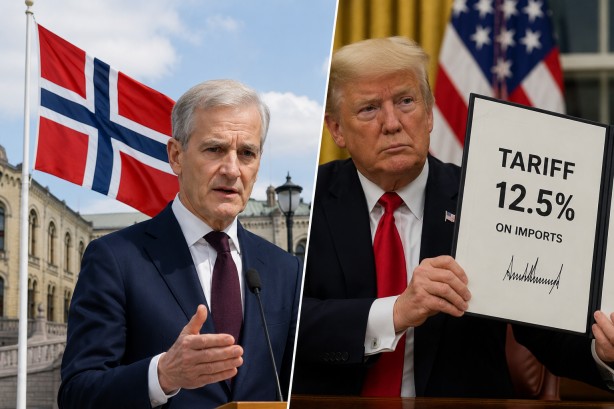
The Norwegian government has condemned the recent decision by U.S. President Donald Trump to implement a 12.5% tariff on a majority of Norwegian imports, criticizing it as both unfair and lacking justification. Effective immediately, this new tariff primarily targets Norwegian goods such as seafood, furniture, and industrial products. Espen Barth Eide, Norway’s Foreign Minister, refuted U.S. allegations that Norway failed to prevent imports linked to forced labor, emphasizing that Norwegian legislation strictly bans goods produced through forced or child labor. He confirmed that the Norwegian government has formally expressed its concerns to American officials.
In voicing its objections, Norway also questioned the rationale behind receiving a higher tariff compared to the European Union and the United Kingdom, which are subject to a 10% tariff. Despite the disparity, the Norwegian government declared it would refrain from implementing retaliatory tariffs, citing that such actions would only serve to elevate costs for Norwegian consumers. This stance underscores Norway’s commitment to maintaining stable trade relations, even amid disagreement over the new tariff policy.
Although the United States accounts for a relatively small portion of Norway’s export market, there are concerns among officials and analysts that the tariffs could significantly impact seafood exports, an important sector for the Norwegian economy. Additionally, they warn that this move could undermine the broader principles of free trade, which Norway staunchly supports. The potential reduction in seafood exports may have ripple effects, affecting not just the economy but also Norway’s trade relationships and market dynamics.
The decision by the U.S. to levy these tariffs has sparked a broader discourse on trade practices and the balance of international commerce. Norway’s firm stance against the tariffs reflects its dedication to upholding fair trade practices while seeking dialogue and resolution through diplomatic channels. As the situation unfolds, the Norwegian government remains focused on protecting its economic interests and advocating for equitable trade policies on the global stage.