
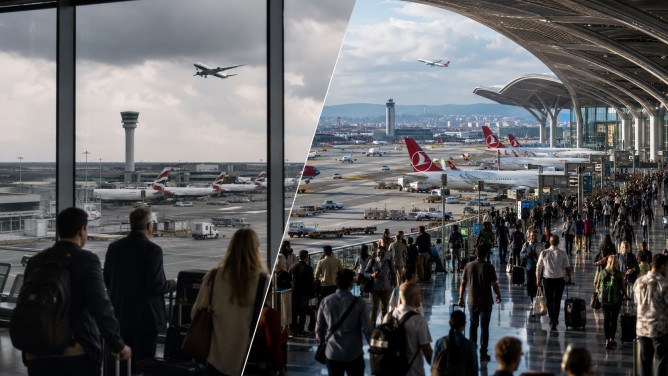
In a notable shift among Europe’s busiest airports, Heathrow has been surpassed by Istanbul Airport in terms of passenger traffic for July. Istanbul Airport managed to handle 8.15 million travelers throughout the month, edging out Heathrow’s 7.86 million. This change marks a significant development as Heathrow’s numbers fell by 1.5% compared to the previous year, while Istanbul experienced a 2.3% increase in traffic. The decline at Heathrow has been partly blamed on disruptions stemming from the ongoing conflict in the Middle East.
The shifting dynamics have intensified calls for the UK government to greenlight Heathrow’s long-discussed expansion plans, which include the construction of a third runway. Currently operating with two runways that are nearing full capacity, the proposed £33 billion project aims to boost Heathrow’s annual capacity to approximately 150 million passengers. Airport officials argue that the expansion is crucial for enhancing the UK’s global connectivity, as well as bolstering trade and tourism.
Since its opening in 2018, Istanbul Airport has rapidly established itself as a major aviation hub, aided by its vast site and 24/7 operations. It currently operates three runways, with a fourth slated to be operational by the end of 2026. This capability has allowed Istanbul to better accommodate the growing number of passengers, further challenging Heathrow’s position as a leading gateway in Europe.
In contrast to Heathrow’s decline, other UK airports are experiencing growth. London Stansted and Manchester airports both celebrated their busiest July on record, with Stansted handling 3.1 million passengers and Manchester accommodating 3.4 million. These figures underscore the shifting patterns in air travel within the UK and highlight the emerging competition among major airports in Europe.