
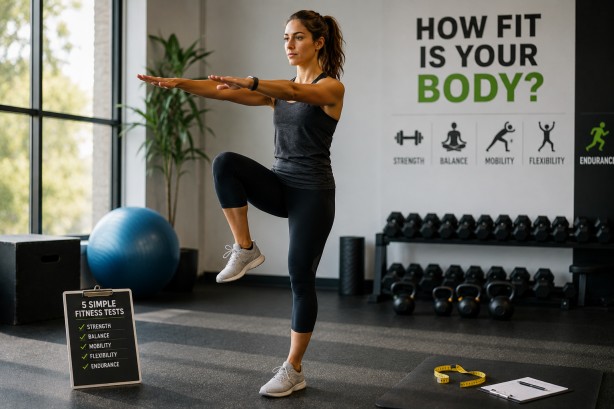
Fitness encompasses more than just the ability to lift weights or endure long-distance running. It also involves everyday functional movements like squatting, rising from the floor, and maintaining balance. These actions can offer valuable insights into one’s functional fitness. Evaluating physical abilities through five straightforward movements can provide a glimpse into areas such as strength, flexibility, mobility, grip, and balance. These exercises require minimal equipment and can be safely executed at home.
The first exercise, the deep squat hold, involves standing with feet about hip-width apart and lowering into a deep squat, keeping heels on the floor for up to 60 seconds without support. This movement tests the mobility of ankles, knees, and hips, as well as lower-body strength and control. An inability to maintain this posture or keeping heels grounded may suggest a need for improved mobility or lower-body control.
Another exercise, the dead hang, uses a secure pull-up bar to hold the body off the ground with arms extended for 30 seconds, providing an indication of grip strength and upper-body endurance. This activity also demands shoulder stability and control. Beginners should ensure the bar is properly secured and avoid this exercise if it could worsen existing injuries.
Attempting to rise from a seated position on the floor without using hands, knees, or forearms challenges lower-body strength, balance, coordination, and mobility. Struggling with this motion could point to areas needing enhancement, though performance can vary greatly based on factors like age, flexibility, past injuries, and overall fitness.
Additional movements include the forward fold, where standing with feet hip-width apart and bending forward tests flexibility, particularly in the hamstrings and back muscles. The single-leg balance, standing on one leg and progressing to closing the eyes, assesses balance, proprioception, and ankle stability. These exercises collectively offer a snapshot of functional fitness elements. They are not medical tests and provide no universal benchmarks, as age, experience, injuries, and body structure influence outcomes. The aim is to identify areas for improvement and work on them gradually through consistent, safe exercise.