
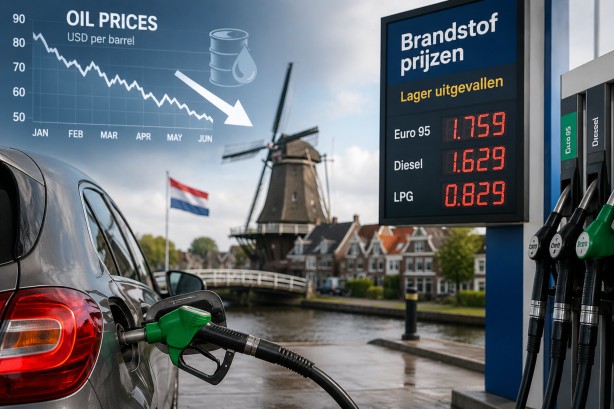
In a significant market shift, oil prices plummeted following the cessation of military actions between the United States and Iran. This development has sparked anticipation of reduced fuel costs in the Netherlands in the near future. The price of Brent crude, a key benchmark, saw a substantial decrease, falling from over €88 per barrel at the end of last week to slightly above €81.
The drop in oil prices was further influenced by the strengthening of the euro, which has made oil imports cheaper for European nations since oil transactions are conducted in US dollars. As a result, this currency dynamic has contributed to the declining trend in oil prices, offering a potential reprieve for consumers in Europe.
Despite the downward trend in crude oil prices, the advisory price for gasoline in the Netherlands remains high at €2.634 per liter. This figure is marginally below the record high of €2.646 per liter, which was established earlier this year. The escalation of conflict involving Iran, which began in late February, has been a significant factor in driving up fuel prices over recent months.
Analysts project that the reduction in oil prices will eventually lead to lower prices at the pump for consumers. However, due to the usual delay in reflecting global oil market changes in retail prices, consumers might experience this decrease at fuel stations only after several days.